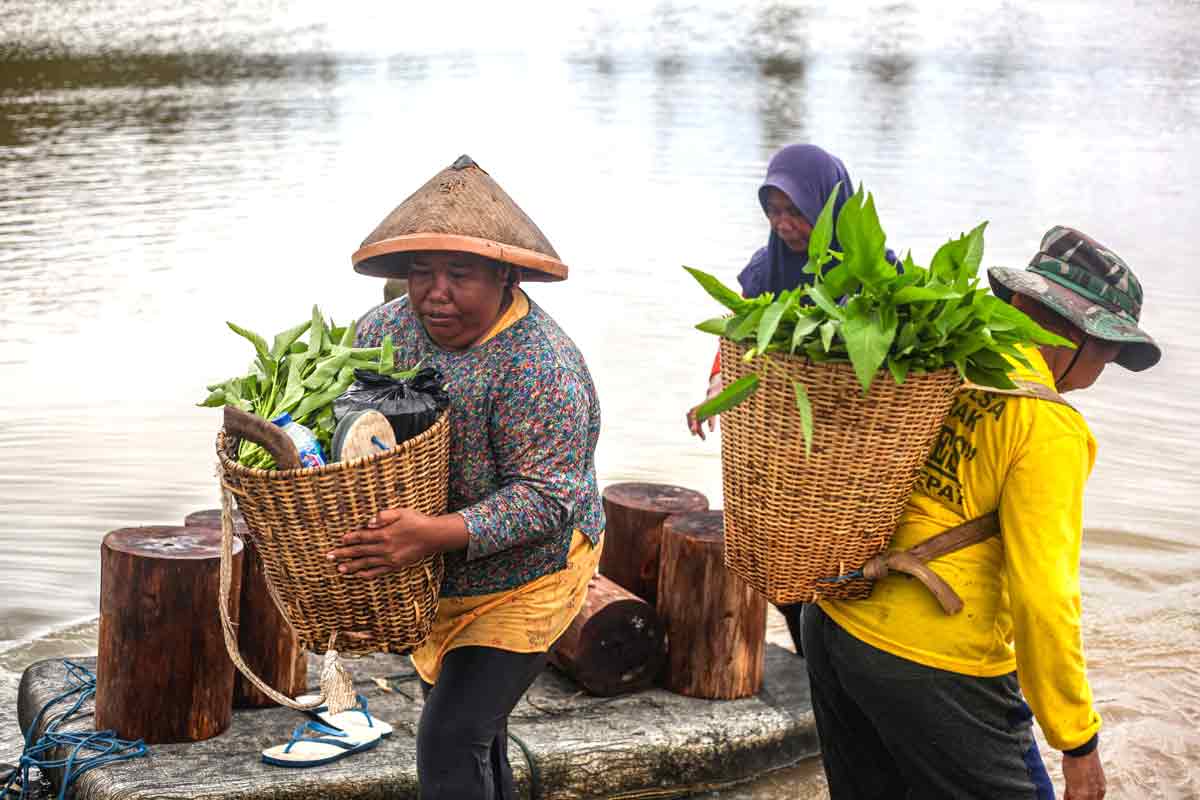
This project studies indigenous foodways and food insecurity as a lived, physical and sensory experience imbued with contested moral, political, and affective significance for those subjected to deleterious effects. I call the study “Beyond Insecurity” (hereafter the BI). The BI aims to conceptualise food insecurity as a material, moral, affective, and symbolic experience. BI combines empirical and discursive analyses to stimulate a critical and mutually productive dialogue between the lived experience of insecurity, the indigenous perspective, and the established concept and measurement of food insecurity.
BI concept employs the empirical examination of the status of indigenous food security. It evaluates all four recognised components of food security—food availability, access, utilisation and stability—at household levels and how CC has affected them. Then, it investigates how CC affects how people produce, process, consume, and distribute food.
The BI concept also evaluates the empirical findings on food security, the changing of indigenous foodways in the moral, political, and ontological senses, and how indigenous peoples construct their identity and environment. It examines how food insecurity is shaped not merely by food access and availability but also by what kind of food, who produced it, where it came from, and how they consume it (see Chao 2021).
Lastly, the BI concept attends to the political aspect of foodways. Scholars point to the inadequate understanding and technocratic intervention of mainstream climate change to generate new technocratically driven ecomodernist solutions (such as promoting intensive farming, large-scale food production, and employment outside agriculture), reiterating the troubling argument that food scarcity is tied to the imbalance of power relations. This point requires a multi-site and interdisciplinary tradition of scholarship that understands the links between knowledge, power, position, and the reorganisation of food materials and their impacts on nature and people.

 01
01